6 Common Types Of Acne Spots
posted in Skin & Body Tips on 2/28/2014
There are several types of acne spots.
the 6 common ones are;
1- blackheads
2- whiteheads
3-papules
4-pustules
5- nodules
6- cysts.
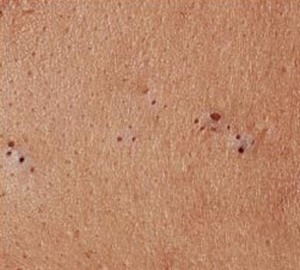
Blackheads
They occur when there is a larger opening in the pore and dead skin cells form a partial blockage causing the skins natural oil (Sebum) to build up beneath the surface.
They occur when there is a larger opening in the pore and dead skin cells form a partial blockage causing the skins natural oil (Sebum) to build up beneath the surface.
Although the name suggests that the spots are black, it is often only the very tip of the spot which is breaking the surface of the skin that is black. This is as a direct result of oxidisation of the sebum and melanin in the skin cells.
These types of spots usually last longer than most other type
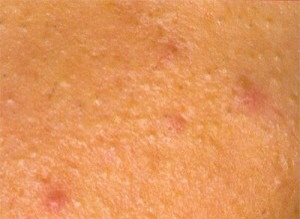
Whiteheads
Whiteheads are very similar to blackheads in that they are formed in almost exactly the same way except that dead skin cells not only block the pore, but they also form a layer over the top of it, covering the opening completely.
Whiteheads are very similar to blackheads in that they are formed in almost exactly the same way except that dead skin cells not only block the pore, but they also form a layer over the top of it, covering the opening completely.
As the oil builds up it pushes the skin outwards but the oil does not break the skin as with a blackhead so it is not oxidised and the colour remains white, hence its name “whitehead”.
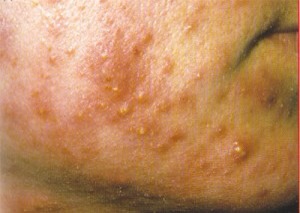
Papules
Papules differ slightly from other types of acne spots in that they do not contain any puss. They are inflamed red spots incurred from the excess sebum and they are raised up from the skin.
Papules differ slightly from other types of acne spots in that they do not contain any puss. They are inflamed red spots incurred from the excess sebum and they are raised up from the skin.
However they do not have a head and as a result of this, they are unable to be popped. They often appear in groups or clusters but may show themselves singularly.
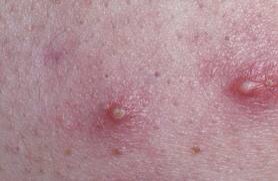
Pustules
Pustules are often thought of as the stereotypical spot or zit. Closest to the surface of the skin, they are red and can often be described as “angry looking”. As the lesion moves outwards from the skin, a prominent head forms often white or yellow in colour.
Pustules are often thought of as the stereotypical spot or zit. Closest to the surface of the skin, they are red and can often be described as “angry looking”. As the lesion moves outwards from the skin, a prominent head forms often white or yellow in colour.
Pustules may be popped or drained but there is definitely a right and wrong way to carry out the procedure and research should be done before attempting to do so.
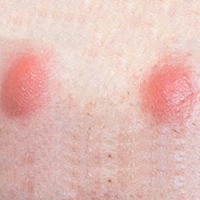
Nodules
Nodules are much larger in size than popules and pustules and can be really painful. Unlike other types of inflamed acne spots, it can take many months to get rid of nodules and, in some cases, you will be able to remove nodule only with the dermatologists help.
Nodules are much larger in size than popules and pustules and can be really painful. Unlike other types of inflamed acne spots, it can take many months to get rid of nodules and, in some cases, you will be able to remove nodule only with the dermatologists help.
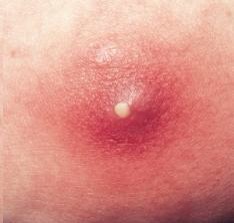
Cysts
Cysts appear similar to acne nodules, however they are filled with pus and are very painful. Never try to pop or squeeze cysts since it can lead to deeper infection and serious inflammation which will last for months.
Cysts appear similar to acne nodules, however they are filled with pus and are very painful. Never try to pop or squeeze cysts since it can lead to deeper infection and serious inflammation which will last for months.
While mild and moderate forms of acne are characterized by whiteheads, blackheads, papules and pustules, nodules and cysts is a sign of severe acne.
More tips like this
Skin & Body Tips
Soft & Acne/Spots Free Skin Within 5 Days Or Less!
80919
Skin & Body Tips
100% guaranteed acne treatment for all skin types using items you probably already own
2071
Skin & Body Tips
One Fool Proof Plan To Get Rid Of Acne For All Skin Types
814
Skin & Body Tips
Very Useful Acne Chart!!! Tells Why Different Types Of Acne Occur And How To Deal With It. 🙎
3018
Skin & Body Tips
Overnight Acne Spot Treatment
1883
Skin & Body Tips
Acne Spot Treatment
132
Skin & Body Tips
Do You Have unwanted Freckles, Acne Or Acne scares, Age Spots, Or Just Want Better, Softer Skin?
11K89
Skin & Body Tips
Quick & Homemade Acne Spot Treatment Paste
7988